

What is meant for you cannot be taken from you.
Every Jamaican has heard the saying, “Wah ah fi yuh cyaan un fi yuh.” It usually comes after disappointment. You didn’t get the job. The relationship ended. The house sold before you could make an offer. Someone else received the promotion or launched the business idea you had been planning for years. While we are still trying to make sense of what happened, an older voice calmly reminds us, “Wah ah fi yuh cyaan un fi yuh.”
At first, the proverb sounds like a way to soften life’s blows. Look a little deeper, however, and it reveals a profound philosophy about purpose, patience, and trust. It suggests that what truly belongs to us cannot ultimately be stolen by another person’s ambition, delayed by bad timing, or erased by temporary setbacks. Our responsibility is not to control every outcome but to become the kind of person who is ready when the right opportunity arrives.
That message feels almost revolutionary today because we live in a culture built on comparison. Every scroll through social media invites us to measure our lives against someone else’s. Friends announce promotions, engagements, graduations, and dream vacations. Entrepreneurs celebrate six-figure launches. Influencers seem to succeed overnight. It is easy to believe that life is one giant race and that every opportunity someone else receives leaves fewer opportunities for the rest of us.
The Jamaican proverb quietly challenges that way of thinking. Life is not a queue where somebody else’s blessing pushes us farther back. Our journeys are different because our callings are different. Another person’s success is not proof that we have failed. Often, it simply reminds us that our own story is still unfolding.
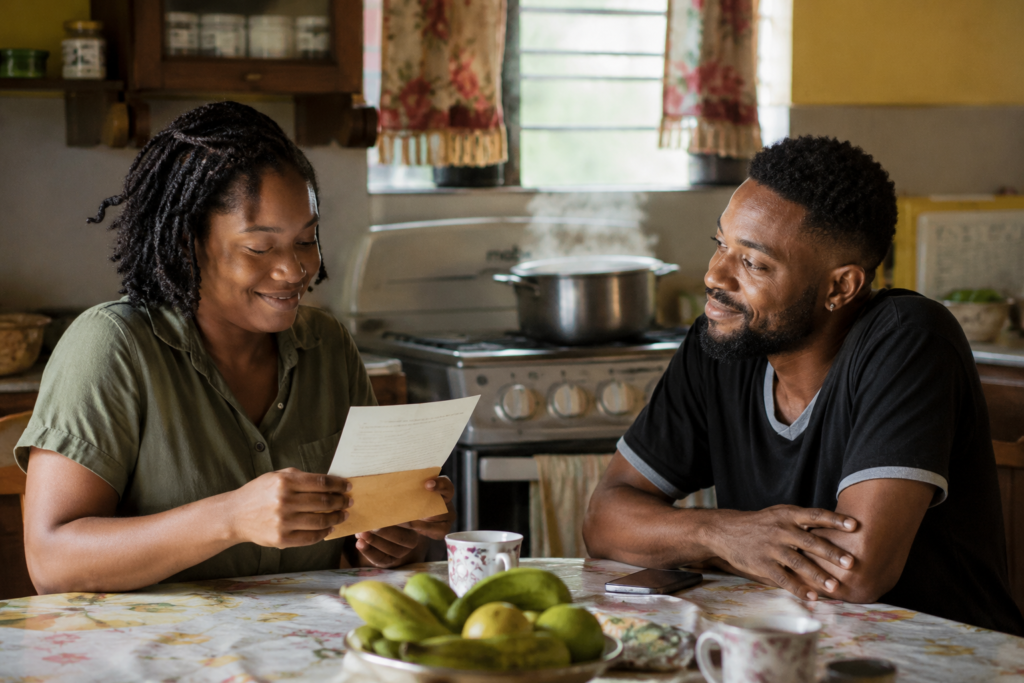
That does not mean every dream automatically comes true. The proverb is not permission to sit on the verandah waiting for destiny to knock on the door. We are still expected to work hard, prepare ourselves, learn from failure, and remain faithful to the responsibilities in front of us. The saying is about confidence rather than entitlement. It reassures us that when we have done our part, we do not need to live in constant fear that someone else can permanently take away what life has prepared for us.
This perspective changes the way we respond to success and disappointment alike. Instead of asking, “Why did they get what I wanted?” we begin asking, “What is life preparing me for?” That question shifts our attention from resentment to growth. It encourages us to spend less time looking sideways and more time looking inward.
Psychologists have long observed that comparison is one of the quickest paths to unhappiness. We naturally evaluate ourselves against the people around us, but comparison easily becomes a trap. We stop appreciating our own progress because someone else appears to be moving faster. We become distracted by another person’s journey instead of developing our own gifts. Ironically, the more energy we spend watching everyone else, the less energy we have available to build the future we actually want.
Brené Brown writes that grounded confidence comes from knowing who we are rather than constantly seeking proof that we are enough. People with grounded confidence are able to celebrate another person’s success without experiencing it as a personal threat. They understand that someone else’s achievement does not diminish their own worth. That insight echoes the wisdom of this Jamaican proverb. If what is truly ours cannot be taken away, then we no longer have to live with clenched fists, guarding every opportunity as though the world has only a limited supply of success.
That trust also frees us from another temptation: chasing opportunities that were never ours in the first place. Many of us have pursued careers because they looked prestigious, relationships because they appeared successful, or lifestyles because everyone else seemed to want them. We spent years climbing ladders only to discover they were leaning against the wrong wall. The proverb invites us to ask a more important question than, “Can I get this?” It asks, “Is this truly mine to pursue?”
There is a quiet confidence in people who believe this proverb. They still prepare carefully for interviews. They still save money, practise their craft, and pursue excellence. They simply refuse to panic when life takes an unexpected turn. They understand that delays are not always denials. Sometimes what feels like a closed door is simply protection from walking into the wrong room.

Perhaps the greatest gift of “Wah ah fi yuh cyaan un fi yuh” is the peace it offers. It reminds us that we do not have to manipulate people, envy our neighbours, or exhaust ourselves trying to control every outcome. We can focus on becoming wiser, kinder, more skilled, while trusting that our lives are not governed entirely by luck or competition.
Most of us can look back and recognise moments that seemed devastating at the time but eventually proved necessary. The job we did not get led us toward work that suited us better. The relationship that ended made room for one that was healthier. The opportunity that disappeared forced us to develop abilities we otherwise would never have discovered. Looking backward, we often see that life was guiding us toward something we could not yet imagine.
That is why this old Jamaican saying has endured for generations. It speaks to something human beings long to believe: that our lives have meaning beyond the disappointments of the moment. It reminds us that patience is not passive, trust is not weakness, and purpose cannot always be measured by today’s circumstances.
So the next time life seems to pass you by, remember the wisdom that has echoed through Jamaican homes, markets, churches, and street corners for generations. Keep learning. Keep preparing. Keep doing good work. Celebrate the success of others without believing it has diminished your own future. Then trust that what is genuinely meant for you will arrive in its proper season.
After all, wah ah fi yuh cyaan un fi yuh. Has there ever been a time when losing one opportunity unexpectedly led to something even better? Share your story in the comments!
Leave a Reply