
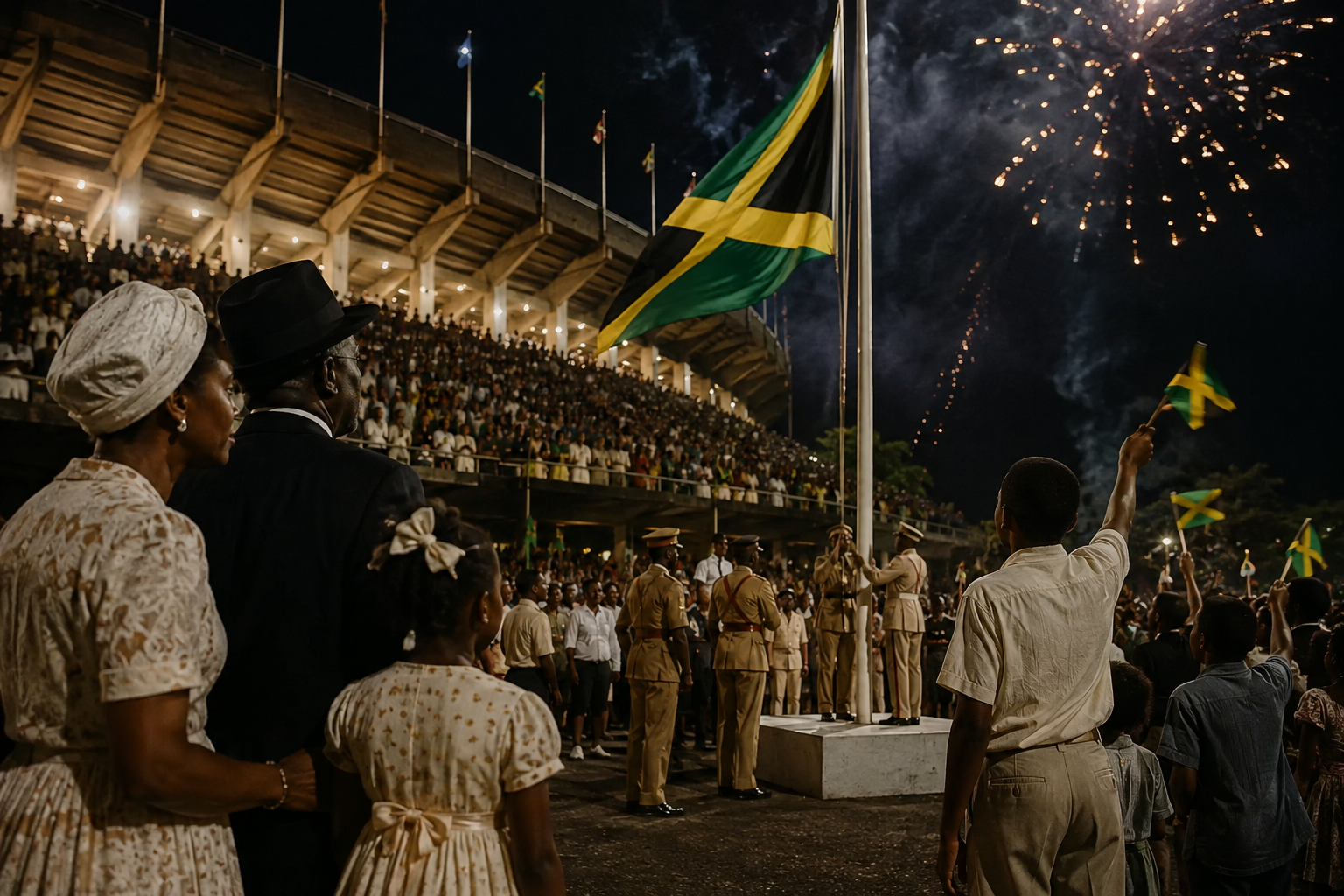
On August 6, 1962, the Jamaican flag rose over a nation whose people had survived more than three centuries of British colonial domination. That history included the enslavement and brutal exploitation of generations of trafficked Africans and their descendants, the violent seizure of land and labour, the destruction of families, the suppression of resistance and a plantation system built to enrich Britain through Jamaican suffering. Emancipation in 1838 ended legal slavery, yet colonial power continued to shape the country through poverty, racial inequality, political exclusion and economic control. Independence marked Jamaica’s formal break from British rule and affirmed the right of Jamaicans to govern themselves, define their national identity and determine their own future.
Sixty-four years later, we celebrate more than the passing of time. We celebrate the stubborn, creative and hopeful spirit that has carried Jamaica through hardship, disappointment and change. We celebrate the people who have continued to build, create, teach, nurture, organise, compete and dream. We also pause to consider the kind of country we are still becoming.
Jamaica’s journey has never been a smooth road. Yet our people have always known how to travel rough terrain.
We lickle but we tallawah
One Jamaican proverb declares, “We lickle but we tallawah.” Another says “Small axe cut down big tree”.
It reminds us that size does not determine strength. A small axe, used with patience and persistence, can bring down something far larger than itself. Jamaica has lived this proverb on the world stage.
We are a small island whose music has travelled into almost every corner of the earth. Reggae gave people a language for freedom, resistance, faith and human dignity. Dancehall created new rhythms, new movements and new ways of speaking that continue to shape global popular culture. Jamaican athletes have made the world stop and watch. Our writers, thinkers, artists, entrepreneurs and cultural workers have extended Jamaica’s influence far beyond our shores.
The proverb also speaks to the quiet work of nation-building. Every teacher who encourages a child, every farmer who plants another crop, every nurse who completes another shift, every business owner who creates employment and every community member who helps a neighbour is swinging a small axe. Each action may appear ordinary. Together, they shape the country.
One one cocoa full basket
Our ancestors also taught us, “One one cocoa full basket” and “Every mickle mek a muckle.” Every small amount contributes to something greater.
Independence was itself the result of many “cocoas.” The labour struggles of 1938 helped to strengthen trade unions, political organisation and demands for better working conditions. In the years that followed, Jamaica established political parties, expanded voting rights, developed new constitutional arrangements and moved towards internal self-government. Independence in 1962 grew out of decades of organising, sacrifice and public participation.
That lesson still matters. National development rarely arrives through one dramatic act. It grows through many choices repeated over time: keeping our communities clean, supporting Jamaican businesses, protecting children, improving schools, strengthening public institutions, caring for the environment and holding leaders accountable.
The Jamaica we hope to see at 70, 75 or 100 years of Independence will be shaped by what we do at 64.
Trouble Nuh Set Like Rain
Jamaicans understand that difficulty seldom announces itself politely. As the proverb says, “Trouble nuh set like rain.”
Rain often gives us some warning. The sky darkens. The breeze changes. Trouble can arrive suddenly.
Across our independent history, Jamaica has faced economic pressure, hurricanes, crime, inequality, migration, public-health emergencies and political division. Families have endured unemployment, rising costs and uncertainty. Communities have rebuilt after storms and floods. Through it all, Jamaicans have continued to improvise, adapt and find a way forward.
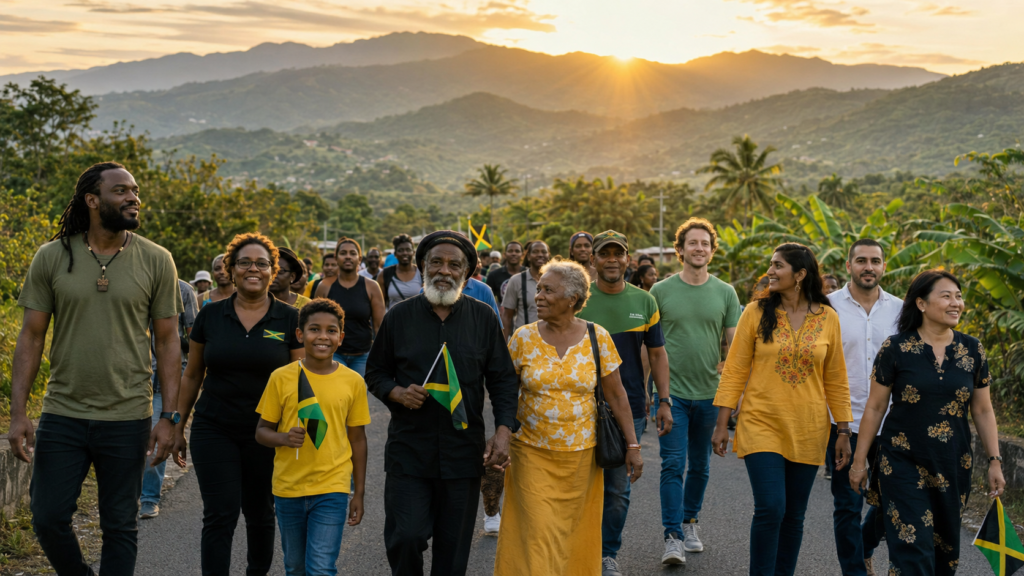
Our resilience deserves celebration, though resilience should also lead to preparation. Another proverb advises, “Nuh wait till di well dry fi dig it.” Wisdom calls us to strengthen our systems before the crisis comes – continuing to prepare our communities for natural disasters, invest in reliable infrastructure, develop young people, protect our natural resources and create an economy in which more Jamaicans can build secure lives.
Hope is strongest when it travels with foresight.
Nuh Dash Weh Yuh Stick Before Yuh Cross Di Wata
Jamaica’s history also warns us against discarding what has helped us survive. “Nuh dash weh yuh stick before yuh cross di wata.”
As we embrace technology, innovation and new opportunities, let us carry the best of Jamaica with us. Our language, humour, music, food, faith, family traditions, community values and respect for our elders are valuable resources. They help us remember who we are when the world around us is changing quickly.
Progress does not require cultural amnesia. We can build modern industries while protecting Jamaican identity. We can prepare young people for the global economy while teaching them the history of Sam Sharpe, Nanny of the Maroons, Paul Bogle, George William Gordon, Marcus Garvey, Norman Manley and Alexander Bustamante. We can celebrate international success while giving greater support to the people doing meaningful work at home.
Independence gives us the responsibility to decide what we will preserve, what we will improve and what we will create.
Forward Ever
The phrase Forward Ever captures the spirit of this anniversary. It is a call to movement, purpose and courage. It asks us to honour our history by continuing the work our ancestors began.
Forward Ever means believing that Jamaica’s greatest accomplishments do not all belong to the past. New chapters are being written in classrooms, studios, laboratories, farms, offices, workshops and homes across the island and throughout the diaspora.
It means seeing the Jamaican diaspora as part of the national story. Jamaicans abroad carry the culture into new communities, build businesses, support relatives, share knowledge and represent the island in countless fields. Whether we live in Kingston, Clarendon, Portland, Toronto, London, New York, Atlanta or elsewhere, Jamaica continues to live through the ways we speak, create, gather and care for one another.
Forward Ever also asks something of us. Independence is an inheritance, and it is also an assignment. Each generation must decide what freedom will mean in its own time.
Watch: Forward Ever
View the full video on YouTube!
The video celebrates the beauty, history, culture and people of Jamaica. As you watch, notice the faces, landscapes, sounds and traditions that make the island unmistakably our own. Let it remind us that Jamaica is more than a place on a map. Jamaica is memory, rhythm, struggle, imagination and possibility.
Still Building, Still Becoming
At midnight on August 6, 1962, the Union Jack was lowered and the Jamaican flag was raised. Schools, churches, homes, parks and community centres came alive with bells, dances, concerts, bonfires, fireworks and celebrations. A new nation had stepped forward.
That nation is still growing.
At 64, Jamaica carries both achievement and unfinished work. We have reasons to feel proud, and we have responsibilities that require courage. Our proverbs remind us that progress is usually built through small actions, persistence, preparation and practical wisdom.
So we celebrate the music, the food, the flag and the festivities. We remember those who struggled to bring us here. We honour the people who continue to hold communities and families together. Then, with hope in our hearts and work in our hands, we face the years ahead.
Forward Ever. Jamaica, land we love.
Join the Conversation
What Jamaican proverb best describes the strength, progress or hope you see in Jamaica today? Share the proverb and tell us what it means to you.
Leave a Reply