
On Planning for the Parts of Yourself You Cannot Leave Behind
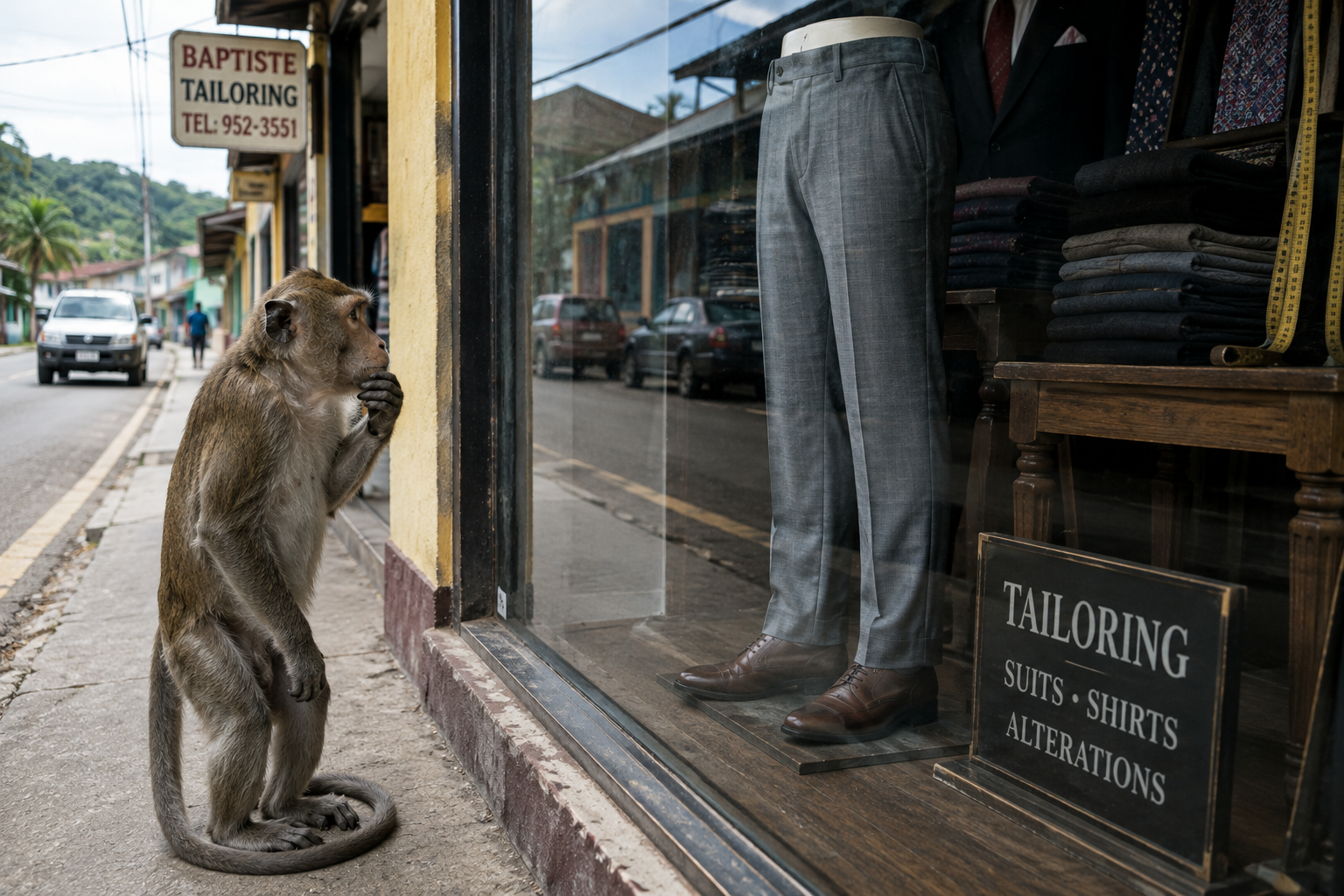
Picture the monkey standing outside the tailor shop window, admiring the trousers hanging there. Sharp crease, good fabric, the kind of trousers that would make anybody look like they have their life together. The temptation is immediate. But any monkey with sense pauses before going inside, because there is a tail to consider, a whole part of himself that does not disappear just because he wants to look like the gentleman in the window. Before monkey buy trousers, him haffi know weh fi put ‘im tail. Before you take on the new thing, plan ahead, know what it requires, and how you will handle parts of yourself and your life that are affected by the change.
What the Proverb Actually Says
A monkey in trousers is a funny image precisely because it exposes a mismatch, a creature trying on a garment designed for a body without a tail, without pausing to solve the actual problem that tail presents. The proverb takes aim specifically at ambition that skips the planning step.
Every new role, relationship, or possession comes with a tail. A promotion comes with new pressures your current habits were not built to handle. A marriage comes with two families, two histories, two sets of expectations, all of which show up whether or not the wedding planning accounted for them. A new house comes with a mortgage that does not care how much you loved the kitchen. The wise move, the proverb says, is to know where that tail is going to sit before you commit to the trousers.
In the Home: Preparing for What a New Season Actually Requires
Families rush toward milestones constantly, a new baby, a move to a new city, a child leaving for university, without doing the quieter work of asking what will actually be required once the milestone arrives. The excitement of the trousers is real. The tail, the sleepless nights, the culture shock, the empty bedroom, arrives regardless of how much planning went into the celebration.
A family preparing for a new baby does well to talk honestly about who handles what at three in the morning, not just what color to paint the nursery. A family preparing to relocate does well to research the schools, the community, the cost of living, not just the excitement of a fresh start. The proverb asks families to hold both the joy of the new thing and the practical weight of it in the same hand, at the same time, before the decision is made rather than after.
In Relationships: Knowing Your Own Tail Before You Commit
This proverb has particular bite when it comes to love. People rush into relationships, engagements, and marriages captivated by how good the trousers look, the image of the couple, the milestone itself, without asking the harder question: what parts of myself am I bringing into this that need somewhere to go?

Old wounds do not disappear at the altar. Financial habits do not reset with a new ring. Family dynamics, insecurities, communication patterns built over a lifetime, all of it comes along, tail and all. The couples who build something lasting are usually the ones who had honest conversations before the wedding about where all of that was going to sit, not the ones who assumed love alone would tailor the fit.
Before committing to someone, know your own tail. Know your patterns, your triggers, your history. A partner cannot help you make room for what you refuse to acknowledge you are carrying.
At Work: The Trousers of a New Title
Ambitious professionals chase promotions and new ventures with the same eagerness as the monkey at the window. The new title looks sharp. The new business card feels good in the hand. What often goes unconsidered is the tail, the actual demands of the new role, the relationships that shift once you manage people who used to be your peers, the hours a new business genuinely requires versus the hours you imagined it would require.
The professionals who thrive after a big leap are rarely the most talented in the room. They are the ones who did the unglamorous work beforehand of asking what this role will actually demand of my time, my relationships, my energy, and where I am going to put that demand once it arrives. They bought the trousers only after solving for the tail.
Practical Ways to Live This Proverb
Before saying yes to a major opportunity, list the parts of your current life, your habits, your relationships, your responsibilities, that will still exist after you say yes. Ask specifically where each one will go.
When admiring someone else’s outcome, a title, a marriage, a business, resist the urge to want only the visible part. Ask what tail came with it, what unglamorous demands sit behind the image you are drawn to.
Talk through the practical logistics of big decisions with the people who will be affected by them, before the decision is finalized rather than after. A conversation about weh fi put yuh tail is a conversation about respect for everyone involved.
Give yourself permission to admire the trousers from a distance a little longer if you have not yet solved for the tail. Wanting something does not obligate you to acquire it before you are ready.
A Closing Thought
The trousers in the window will still be beautiful tomorrow. What changes between today and tomorrow is whether you have done the quiet work of knowing where your tail is going to sit. That work rarely feels exciting in the moment. It is, however, the part that determines whether the new thing actually fits or whether you spend the next season pulling awkwardly at a garment that was never going to accommodate what you brought into it.
What trousers are you currently eyeing, a role, a relationship, a new chapter? Have you actually worked out where your tail is going to sit, or are you hoping the fitting room figures it out for you?
Leave a Reply