

On the Cost of Borrowing Somebody Else’s Path
Many Jamaican children have heard it from a mother, an auntie, or a teacher standing with one hand on a hip: Falla falla get lef. When we always follow others, we get left behind. It usually came after someone copied a friend into trouble, jumped on the latest craze, or went along with the crowd without stopping to think. It is one of those short sayings that stays with you long after childhood because we often see it play out.
What the Proverb Really Means
Falla falla get lef is not about learning from others. We understand the importance of respecting good teachers, wise elders, and experienced people. The proverb is about following without thinking. It describes the person who moves simply because everyone else is moving, never asking where the crowd is going or whether it is the right direction.
The repeated words – falla falla – even sound like footsteps, one after another, steady but thoughtless. That rhythm is the warning. Once we stop making our own choices and simply copy others, we begin to lose sight of our own path.
So what does “get lef” mean here? It means getting left behind in our own lives. Trends change. Opinions shift. The crowd moves on to the next thing. If we have spent our lives following everyone else, we are left wondering what we actually believe or where we really want to go.
At Home: Helping Children Think for Themselves
Parents see this often. A child suddenly wants the same shoes, the same phone, or the same hairstyle as everyone in class. Sometimes they even adopt their friends’ opinions about teachers, music, or other children without ever asking themselves what they really think.
Raising independent thinkers matters. Children who don’t learn to make their own decisions often become adults who wait for everyone else’s approval before acting. That habit can shape careers, relationships, and dreams. Celebrating what makes each of our children unique can also help them to think for themselves rather than conforming to your own mold or that of other siblings. I remember a close family friend with four children. One shone academically and the others got lost in his shadow, often subject to the question of “why can’t you be like Junior?”
It starts with small moments. Ask children what they think before giving your opinion. Let them learn from the natural results of copying a friend into a poor choice. Celebrate the child who can politely say, “I see it differently.” That confidence grows over time.
In Relationships: Living Someone Else’s Story
Relationships are another place where falla falla shows up. Couples compare themselves with friends who are getting married, buying homes, or starting families. Social media makes it even easier to believe everyone else’s relationship is following the “right” timeline.
The problem is that every relationship has its own story. What works for one couple may not fit another. The happiest relationships are built around shared values, honest conversations, and decisions made together, not around keeping up with somebody else’s milestones.
Every now and then it helps to ask a simple question: Are we making this choice because it fits us, or because everyone else seems to be doing it?
Even within a relationship, each partner needs to honour their own path (their unique identity and dreams) rather than lose them to the other partner’s.
At Work: Standing Out Instead of Blending In
Workplaces are full of follow-the-crowd thinking. One company launches a new product and suddenly everyone else rushes to copy it. A management trend becomes popular, and businesses adopt it without asking whether it actually solves their own problems.
Some organizations struggle with groupthink, where conformity in a group comes before analysis of alternative ideas, leading to poor decisions. Research indicates that organizations that constructively encourage employee dissent help to surface diverse perspectives. Those who never dissent may be perceived as disengaged or lacking critical insight, effectively “getting lef” in promotions, influence, or trust.
The people who move ahead are usually the ones willing to think differently. They pay attention to what others are doing, but they are not afraid to ask hard questions or suggest a better approach. Leaders earn trust by bringing fresh ideas, not by sounding exactly like everyone else.
Sometimes the most valuable person in the room is the one who respectfully says, “Have we considered another option?”
On Social Media: Following the Loudest Voice
Social media rewards speed. Trends spread in hours. Opinions become popular overnight. It can feel as if everyone is wearing the same thing, buying the same products, visiting the same places, and repeating the same ideas.
The pressure to keep up is real, but so is the cost. Chasing every trend leaves us constantly trying to catch up. Before long, the crowd has moved on again.
The steadier path is to pause before joining in. Ask whether something truly fits your values, your goals, and your life. The loudest voices are not always the wisest ones.
Søren Kierkegaard provocatively said “the crowd is untruth,” alerting us to the danger of surrendering our personal responsibility to popular opinion.
Living the Proverb
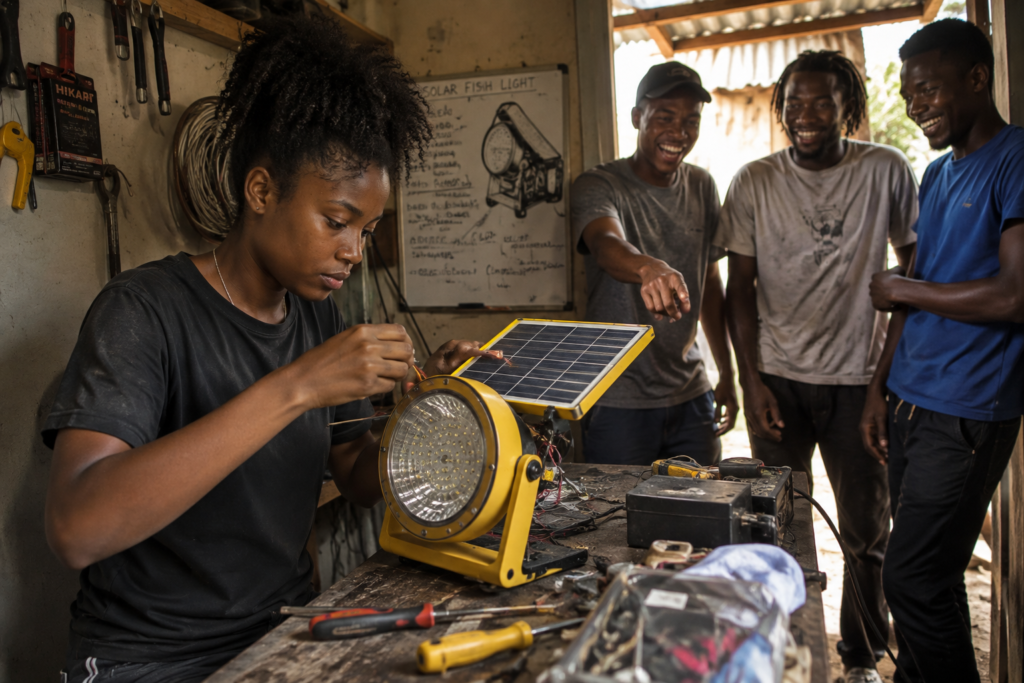
I love what Howard Thurman refers to as “the sound of the genuine”. Like him, this proverb invites each of us to slow down and discern what is uniquely us before we give in to simply following the crowd. When everyone seems to be making the same choice, ask yourself what you would decide if nobody else’s opinion were visible.
Practice respectfully disagreeing in everyday conversations. Independent thinking becomes easier the more we use it.
Learn from people instead of simply copying them. Understanding why something works is far more valuable than repeating what someone else did.
And teach young people to ask “Why?” before asking “How?” That simple habit builds judgment that lasts long after the latest trend has faded.
A Closing Thought
The crowd always looks confident because everyone is moving together. But confidence borrowed from the crowd disappears as soon as the crowd changes direction. Falla falla get lef reminds us that the safest path is not always the busiest one. Knowing why we are walking is far more important than keeping pace with everyone else.
Where are we following simply because everyone else is? What would happen if we paused, looked around, and chose the path that truly fits who we are? When has choosing your own path turned out better than following the crowd? We’d love to hear your story. Share in the comments!
Leave a Reply